
Drive Results with a Data-Driven Marketing Agency
At Loop Strategic Marketing, we focus on one thing: helping our clients grow. We go beyond improving your online presence by building long-term partnerships that deliver measurable results. Every strategy we create is tailored to your business goals and backed by data to increase visibility, attract qualified traffic, and drive sustainable growth.
Our full-stack digital marketing services include SEO, PPC advertising, and high-performance website design. Each element works together as part of a unified strategy. We optimize your site to rank higher in search results, run targeted ad campaigns that maximize your budget, and design websites that are built to convert visitors into customers.
We believe marketing should produce clear, measurable results. That is why we focus on transparency, ongoing optimization, and strong ROI. When you partner with Loop, you gain a marketing team committed to helping your business grow.
We Have the Best Digital Marketing Experts
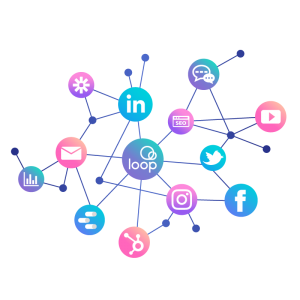
Trust your digital strategy to a team that knows how to turn attention into revenue. Our certified experts manage the full journey from top-of-funnel engagement to closed business. Whether we’re running high-performing Google Ads campaigns or leveraging the full power of HubSpot, we build systems that support real growth.
Every part of your strategy is designed to work together. With the right tools, data, and expertise in place, we help you move through the digital landscape with confidence and turn opportunities into results.
We're business builders, partners, and consultants
Reach out if you'd like to see how Loop Marketing can elevate your business strategy

Make your next campaign a hit with Loop.
A FULL SERVICE DIGITAL MARKETING AGENCY
Real Strategy
We use years of research and experience to craft profitable campaigns for our clients.
Data Driven Decisions
The numbers don't lie. We track your marketing analytics diligently to identify what is working and what needs work.
Not Just Marketing
We are a full digital operations agency. Our skillset goes far beyond digital marketing for a complete client experience.
Quantifiable Results
We back up our work with trackable results. We work with our clients to identify what they need for results, and work backwards from there.
Crafting the Right Tech Approach for Your Success
Do you know what your business needs? Select your service below. If you’re not sure, thats fine too! We can take you through a needs analysis to identify the right marketing mix for where your business is at.

Marketing Strategy
We help you identify your ideal customer, and build a plan to reach them consistently.

Web Design
We build beautiful & effective websites that resonate with your customers and convince them to take action.
Paid Advertising
We build you a quick, systematic, and effective way to start driving more revenue to your business.

SEO
We build you a long-term & sustainable organic marketing funnel.

Branding & Content Creation
We help you deliver your message to customers in a consistent and impactful way.
Social Media Marketing
We target your ideal client and give them content that brings value.
THE RIGHT DIGITAL STRATEGY FOR EVERY INDUSTRY WE SERVICE
Our track record is proven across multiple industries.
- Healthcare & Medical Services
- Business-to-Business Services
- Residential Real Estate Agents & Brokerages
- Residential Service Businesses
- Restaurants & Retail

Frequently Asked Questions
Social media marketing is a pivotal aspect of digital marketing, encompassing strategies aimed at promoting a business on platforms like Facebook, Instagram, and Twitter. This method forms part of a comprehensive digital marketing strategy, which includes tactics such as search engine marketing (SEM), content marketing, and influencer marketing to boost online presence and drive website traffic.
Effective digital marketing strategies often combine paid advertising, such as PPC (pay-per-click) ads, with organic engagement to maximize reach and engagement. These digital campaigns are designed to enhance visibility on social media channels and search engine results pages (SERPs), aiming to attract and retain a target audience. Digital marketing efforts also extend to email marketing, video marketing, and marketing automation, all tailored to the preferences of mobile device users and other online audiences.
Furthermore, digital marketers increasingly rely on data-driven insights to refine their marketing campaigns, employing techniques from traditional marketing while embracing newer digital channels and technologies. The goal is to create dynamic digital marketing campaigns that adapt to the evolving landscape of digital channels, including dedicated social media platforms and broader internet marketing avenues.
This integrated approach ensures that every facet of a digital marketing campaign is aligned with the overall marketing strategy, contributing to a cohesive and effective online presence.
Was this FAQ Useful?
PPC consulting at Loop Strategic Marketing encompasses a comprehensive suite of services aimed at delivering immediate results and maximizing your return on investment (ROI). Our expert team begins with in-depth keyword research to identify the most effective search terms for your business, ensuring that your PPC campaigns are precisely targeted.
We create compelling ad copy designed to capture attention and drive high-quality traffic to your website. Every aspect of your PPC campaigns is meticulously managed, from strategic bid management to continuous monitoring and optimization.
At Loop Marketing, we go beyond just setting up campaigns. Our services include A/B testing for ad variations to determine what works best, as well as detailed reporting to track key metrics and measure the success of your campaigns. We also specialize in retargeting strategies to re-engage past visitors and drive conversions.
Partnering with Loop Strategic Marketing means embracing a data-driven approach to PPC consulting for maximizing ROI. Our dedicated team ensures your online presence is enhanced and geared towards sustained growth.
For more details on our specialized PPC consulting services, visit our website.
Was this FAQ Useful?
Integrating a CMS (Content Management System) into your business website can significantly enhance its performance and capability. At Loop Strategic Marketing, we specialize in website development and ensure that your site is not only visually appealing but also highly functional.
One of the key benefits of CMS integration is that it allows for easy content updates without requiring extensive technical knowledge. This means your team can quickly publish new blog posts, update product listings, or modify existing content, helping to keep your audience engaged with fresh information.
Moreover, with a CMS, the integration of mobile site optimization becomes streamlined, ensuring that your website performs seamlessly across all devices. Our team at Loop Strategic Marketing employs responsive web design techniques to make sure your site is equally effective and visually appealing on mobile phones, tablets, and desktops. This is crucial as more users access the internet via mobile devices.
Another critical aspect is that a CMS can support responsive web design for Loop Marketing strategies, allowing you to better target and engage your audience. A well-integrated CMS facilitates the incorporation of various marketing tools and analytics, enabling you to track user behavior, analyze data, and make informed decisions to enhance your marketing strategies and overall website performance.
Ultimately, by leveraging CMS integration in your website development, you can enhance your site’s capabilities, improve user experience, and drive measurable results. To explore more about how CMS integration can benefit your business, visit Loop Strategic Marketing and learn about our comprehensive digital marketing solutions.
Was this FAQ Useful?
Traditional marketing efforts, such as print advertisements, events, and TV commercials, can be integrated with digital marketing efforts by including calls to action that direct customers to your website or social media channels. You can also leverage traditional marketing data to improve your digital marketing targeting.
Was this FAQ Useful?
At Loop Strategic Marketing, we put keyword research at the heart of our SEO services. Our approach is grounded in understanding what your potential customers are searching for, so we can optimize your website to meet those specific needs. This forms the basis of our on-page SEO optimization services.
Our team conducts in-depth keyword research to uncover the most relevant and high-performing keywords in your industry. We use these insights to build a comprehensive SEO strategy, seamlessly integrating these keywords into your content, meta tags, and URLs. Alongside this, we perform rigorous technical audits of your website, ensuring it’s finely tuned to deliver the best possible organic search performance. It’s through this multi-faceted approach that we help businesses improve their online visibility and drive the growth of high-quality, organic traffic.
In addition to amplifying your online visibility, we also use keyword research to enhance user experience, increasing the probability of conversions. We continually monitor and optimize our strategy based on performance, ensuring your website stays ahead of SEO trends and continues to rank highly in search engine results. Loop Marketing isn’t just about making your website visible; it’s about making your brand dominant.
Was this FAQ Useful?
Loop Strategic Marketing’s technical SEO audits take a comprehensive approach, analyzing all aspects of your website’s technical infrastructure that could affect its search rankings or user experience. The process involves deep checks for any issues in areas like your site’s mobile responsiveness, URL structure, site speed, and overall site architecture. Our team also scrutinizes your website’s coding, checking for any errors or inefficiencies that could hamper its performance. A major part of the audit involves analyzing your site’s metadata, checking for keyword optimization, and ensuring each page has an appropriate meta description, title, and alt text. Besides, we evaluate your website’s internal and external linking structure to ensure it aligns with SEO best practices. Additionally, we also check to see if your site’s content is search engine friendly and does not contain any broken links, duplicates, or other issues that can potentially harm your search engine rankings. With this thorough and rigorous approach, Loop Strategic Marketing aims to identify all possible SEO issues and subsequently develop a tailored strategy to solve them and enhance your site’s performance.
Was this FAQ Useful?
At Loop Strategic Marketing, we understand the critical role of authoritative backlinks in enhancing your website’s SEO performance. Our multifaceted approach to building authoritative backlinks includes:
1. Content Creation and Outreach: Our team creates high-quality, compelling content that naturally attracts links. We then reach out to reputable websites and influencers in your industry to share and link back to this content.
2. Guest Posting: We write and publish informative articles on high-authority websites, ensuring that each piece includes backlinks to your site, thus boosting your domain authority and organic traffic.
3. Broken Link Building: We identify broken links on high-authority sites within your niche and offer your content as a replacement, securing valuable backlinks.
4. Resource Page Link Building: We connect with webmasters to have your content listed on resource pages relevant to your industry.
By leveraging these strategies, Loop Strategic Marketing enhances your site’s visibility, credibility, and search engine ranking. Learn more about our comprehensive SEO services, including local SEO optimization services, to drive sustained growth and dominate the digital landscape.
Was this FAQ Useful?
At Loop Strategic Marketing, we leverage content as a vital component in our tailored SEO services strategy to enhance online visibility. Our comprehensive SEO strategy blends technical refinement, strategic keyword deployment, compelling content creation, and robust backlink development.
We understand that content is crucial in SEO, playing a significant role in aligning your website’s messages with user intent, and naturally integrating targeted keywords that your potential customers are actively searching for. We strive to craft keyword-rich content, a strategy that not only elevates your site’s relevancy in the eyes of search engines but also engages your audience, thereby increasing organic traffic.
Furthermore, we continue to drive improvements by integrating our strategy with our SEO Analytics and Reporting Services. Keeping transparency at the forefront, we provide clear insights into the performance of our SEO services, consisting of numerous driving factors like keyword ranking, organic traffic, backlinks, and conversions. These insights guide our content strategies, allowing for necessary adjustments and continual improvement to keep your online visibility on an upward trajectory.
Was this FAQ Useful?
At Loop Strategic Marketing, we are a leading SEO agency that offers comprehensive SEO services designed to unlock the full potential of your online presence. Working with us allows your business to significantly enhance its visibility on the web, and drive a substantial increase in organic traffic.
Our robust services incorporate meticulous technical SEO audits. This ensures your website is perfectly primed for success, right down to the minutest detail. Furthermore, we undertake strategic keyword research and on-page optimization, which aligns your website’s content with what your target users are actively seeking.
As an organic traffic generation SEO agency, we specialize in crafting compelling, keyword-rich content, building authoritative backlinks, and providing optimization for local search. This holistic approach not only drives traffic but also facilitates a higher rate of conversion, turning your inbound visitors into loyal customers.
We believe in maintaining transparency with our clients. Hence, we provide comprehensive analytics and reporting services, which not only track the performance of your SEO campaign, but also provide data-driven insights to guide future digital marketing strategies.
With Loop Strategic Marketing, you can achieve sustained growth and dominate the digital landscape in your business niche.
Was this FAQ Useful?
Marketing automation is using software and technologies designed to streamline, automate, and measure marketing tasks and workflows, allowing businesses to increase operational efficiency and grow revenue faster. It is beneficial for repetitive tasks such as email marketing, social media posting, and ad campaigns, where automation can handle time-consuming processes. Marketing automation allows businesses to automatically manage their marketing processes across multiple channels based on pre-defined triggers and actions. It also facilitates the collection and analysis of customer data, enabling personalized and targeted marketing efforts. By automating these tasks, businesses can focus more on strategy and creativity, ensuring that marketing efforts are more consistent, timely, and relevant to the audience. The ultimate goal of marketing automation is to nurture leads more effectively, convert prospects into customers, and improve overall marketing ROI.
Was this FAQ Useful?